employee inclusion
Insights

Employee Wellbeing, Inclusion & Purpose — The New Drivers of Performance in Ghana

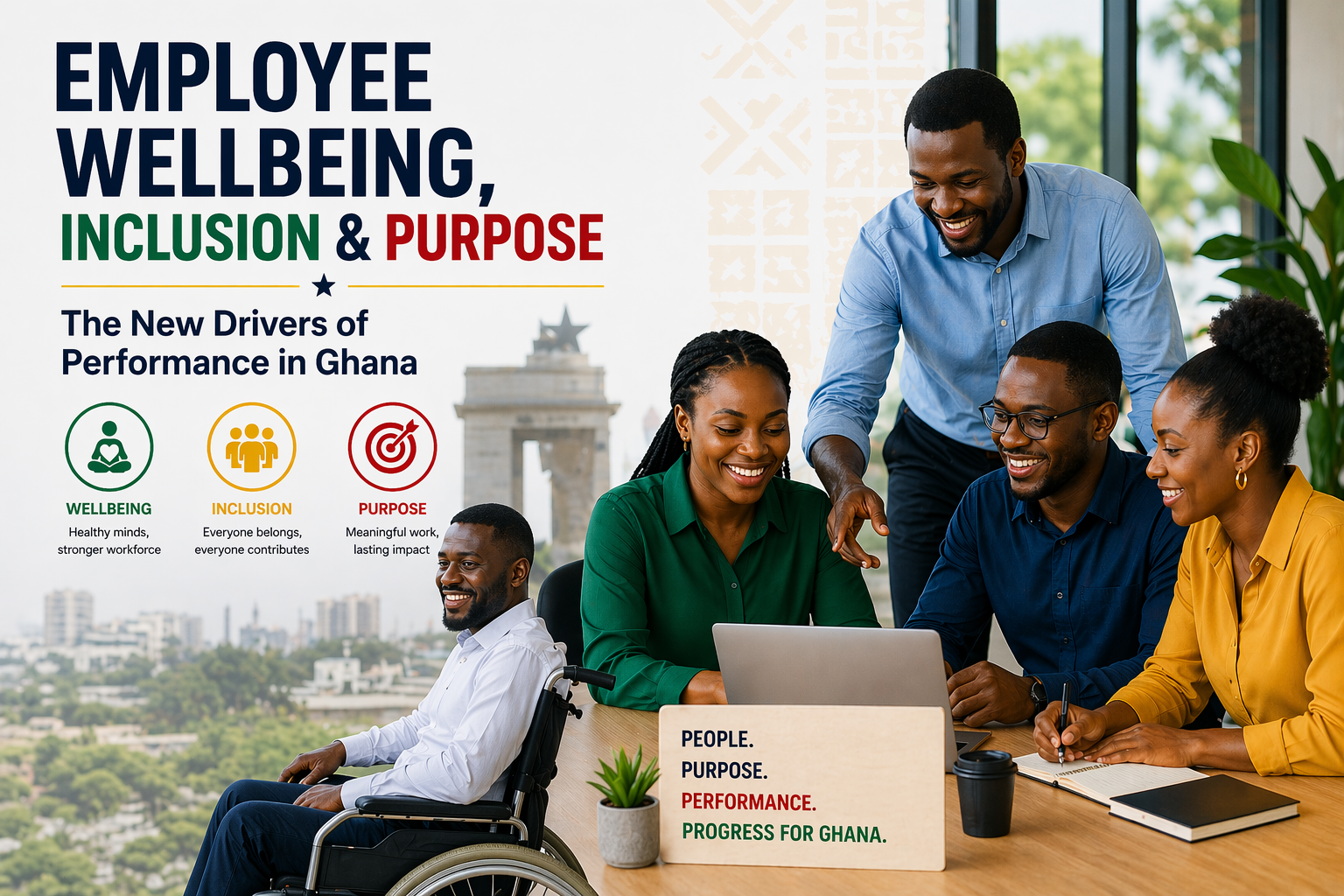
In today’s Ghanaian workplace, performance is no longer driven solely by compensation. A new paradigm is emerging one where employee wellbeing, inclusion, and purpose are central to organisational success. This shift is especially evident among Millennials and Gen Z, who now make up a significant portion of the workforce. 1. Wellbeing is a Business Imperative Employee wellbeing is no longer a “nice-to-have” it is a strategic priority. Studies by World Health Organization show that depression and anxiety cost the global economy over $1 trillion annually in lost productivity. In Ghana, rising work stress, economic pressures, and health challenges make wellbeing initiatives essential. Organisations must invest in: Mental health support programs Flexible work arrangements Health and wellness benefits A healthy workforce is a productive workforce. 2. Inclusion Drives Innovation Diversity and inclusion are not just ethical considerations  they are performance drivers. Inclusive workplaces foster creativity, better decision-making, and stronger team collaboration. For Ghana’s diverse society, inclusion should go beyond gender and ethnicity to include: Persons with disabilities Different educational backgrounds Regional representation HR leaders must create policies that ensure equal opportunity and belonging for all employees. 3. Purpose-Led Organisations Win Today’s employees want to work for organisations that stand for something meaningful. Purpose-driven companies attract and retain top talent more effectively. This is particularly relevant in Ghana, where businesses are increasingly expected to contribute to social impact—whether through sustainability, community development, or youth empowerment. Organisations that align their mission with national development goals will stand out as employers of choice. 4. The Link Between Culture and Performance A strong organisational culture rooted in trust, respect, and shared values directly impacts performance. Employees who feel valued and included are: More engaged More productive More loyal HR must therefore move from administrative functions to strategic culture-building roles. Key Takeaway The future of HR in Ghana lies in building workplaces where people feel valued, included, and inspired. Organisations that prioritise wellbeing, inclusion, and purpose will not only achieve higher performance but will also shape a stronger, more sustainable Ghanaian workforce. Final Thought For any HR leader aiming to be recognised as an authority in Ghana, these two themes the future of work and human-centred performance drivers—are not just trends; they are the foundation of modern workforce strategy. Aligning them with national priorities positions you not only as an industry leader but as a contributor to Ghana’s long-term economic growth.
insight hr ghanajpg
Insights

Skills-Based Talent Management: The Future of Work Starts Now

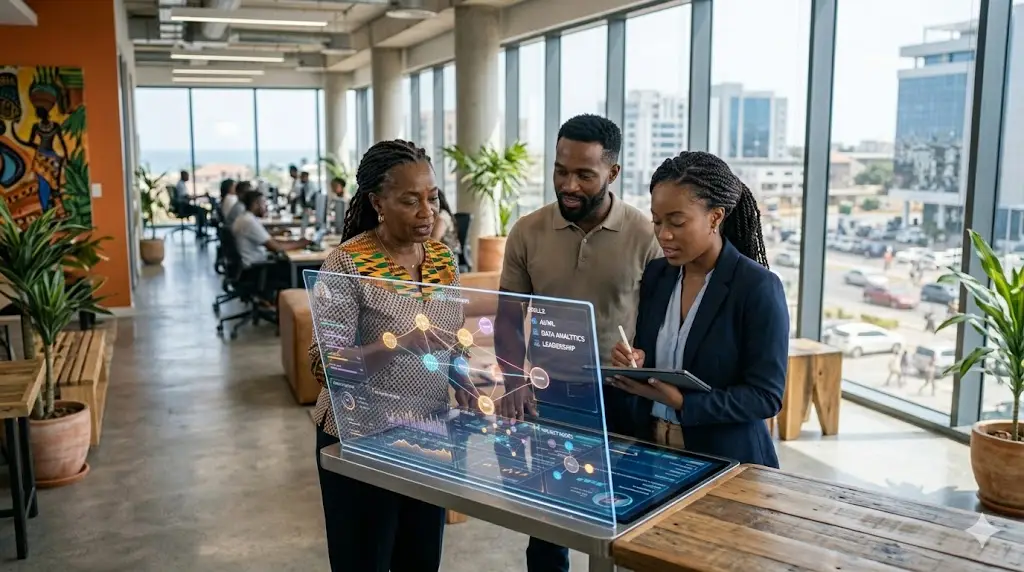
At Insight HR Solutions, we believe the future of talent management is not defined by job titles but by skills, adaptability, and intelligent collaboration with technology. As organizations in Ghana and across the globe face rapid digital transformation, traditional HR models are quickly becoming obsolete. Today’s competitive advantage lies in how well companies can identify, deploy, and grow skills dynamically. This is where skills-based talent management, powered by artificial intelligence (AI), is reshaping the workforce. 1. Moving Beyond Job Titles to Skills and Competencies For decades, organizations structured their workforce around rigid job titles and hierarchies. However, this model is increasingly misaligned with the pace of change in today’s economy. A growing body of research shows that employers are shifting toward skills-first hiring and talent management, prioritizing what employees can do over what roles they have held. In fact, recent studies indicate that skills—especially in emerging fields like AI—are becoming more valuable than traditional qualifications, with measurable wage premiums attached to them. () This shift is driven by three realities: As a result, forward-thinking companies are redesigning roles into collections of skills and tasks, rather than fixed positions. This allows them to redeploy talent quickly, innovate faster, and remain competitive. 2. Internal AI Talent Marketplaces: Unlocking Hidden Potential One of the most transformative tools enabling this shift is the internal AI-powered talent marketplace. An internal talent marketplace is a digital platform that uses AI to match employees to opportunities—projects, roles, or learning experiences—based on their skills, interests, and career aspirations. () These systems deliver significant value: Smarter Talent Allocation AI enables real-time matching of employees to business needs, ensuring the right skills are deployed at the right time. Closing Skills Gaps Organizations can identify existing capabilities and gaps, then proactively upskill or reskill their workforce. () Increased Retention and Engagement Employees gain visibility into internal opportunities, reducing the need to look externally for growth. () Improved Organizational Performance Companies that effectively mobilize internal talent are 2.4 times more likely to outperform their peers. () Globally, organizations like Standard Chartered have already adopted internal “gig-style” marketplaces, where employees work on projects based on their skills rather than fixed roles—unlocking millions in value and accelerating innovation. For Ghanaian businesses, this represents a powerful opportunity to maximize existing talent instead of relying solely on external hiring. 3. Redesigning Jobs for Human–AI Collaboration A common misconception is that AI will replace jobs. In reality, evidence shows that AI is reshaping jobs rather than eliminating them. Recent data suggests that: This means the future workforce will not be human or AI but human with AI. What does this look like in practice? For example: Organizations that embrace this model report increased productivity, with some AI-enabled systems saving employees significant time daily and allowing HR teams to focus on strategic impact. 4. The Strategic Imperative for Ghanaian Organizations In Ghana’s fast-growing economy, businesses face challenges such as: Skills-based talent management offers a practical solution: By integrating AI into HR processes, organizations can move from reactive hiring to proactive talent strategy a critical shift for long-term growth. 5. Key Steps to Get Started At Insight HR Solutions, we recommend the following roadmap: 1. Map Skills Across the Organization Create a dynamic inventory of employee skills—not just job titles. 2. Implement an Internal Talent Marketplace Leverage AI tools to match skills with opportunities in real time. 3. Redesign Roles into Skill-Based Work Break jobs into tasks and capabilities that can evolve. 4. Invest in Continuous Learning Support upskilling and reskilling aligned with business needs. 5. Build a Human–AI Collaboration Culture Train employees to work alongside AI, not compete with it. Conclusion: The Future Belongs to Skills, Not Titles The organizations that will thrive in the next decade are those that understand one simple truth: Talent is no longer defined by position—it is defined by capability. Skills-based talent management, powered by AI and internal mobility, is not just a trend it is the foundation of the future of work. At Insight HR Solutions, we are committed to helping organizations in Ghana transition from traditional HR models to intelligent, skills-driven ecosystems where people, technology, and opportunity come together to drive sustainable growth. Ready to transform your workforce? Partner with Insight HR Solutions and lead the future of work in Ghana.

Scroll to Top