
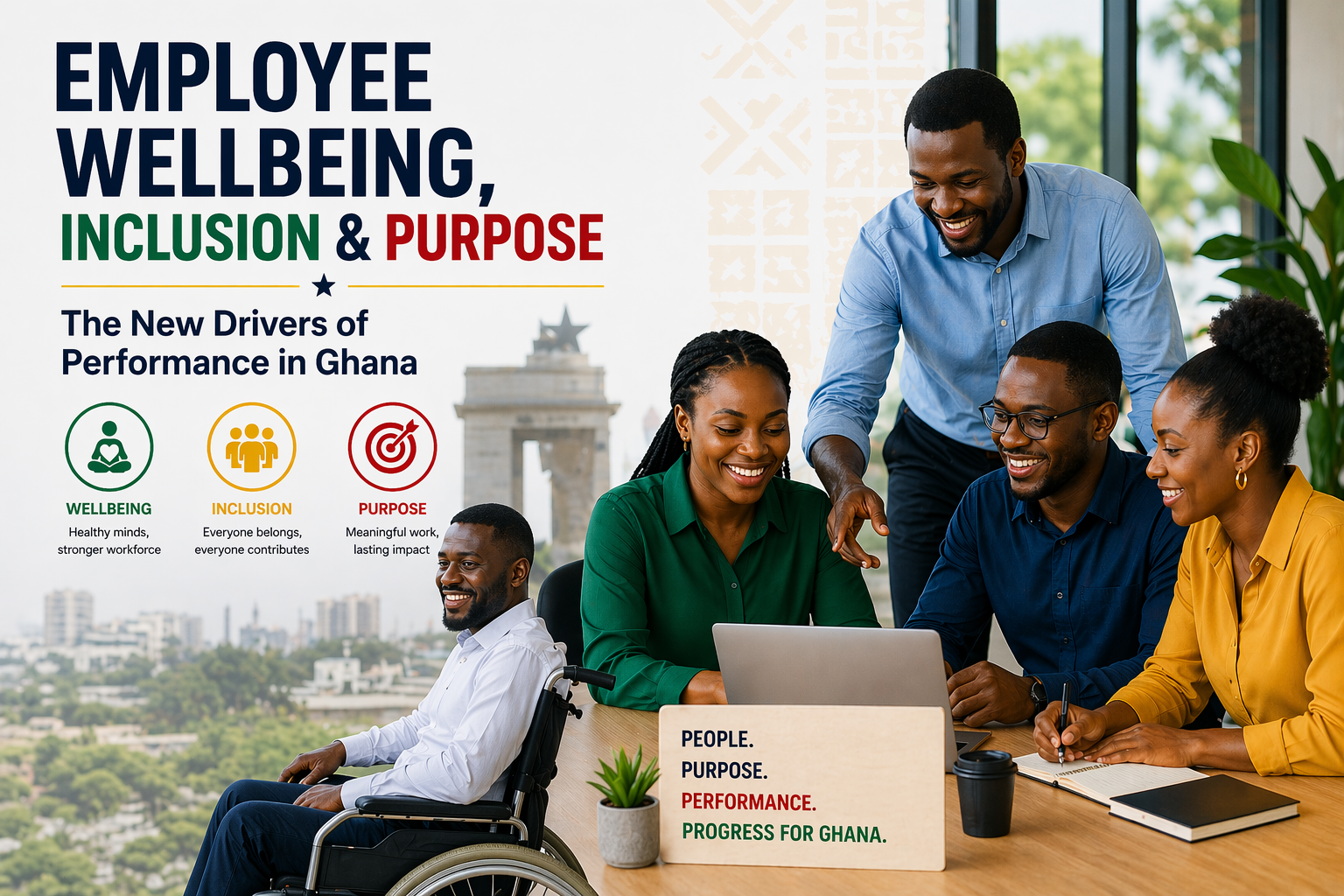
In today’s Ghanaian workplace, performance is no longer driven solely by compensation. A new paradigm is emerging one where employee wellbeing, inclusion, and purpose are central to organisational success. This shift is especially evident among Millennials and Gen Z, who now make up a significant portion of the workforce.
1. Wellbeing is a Business Imperative
Employee wellbeing is no longer a “nice-to-have” it is a strategic priority. Studies by World Health Organization show that depression and anxiety cost the global economy over $1 trillion annually in lost productivity.
In Ghana, rising work stress, economic pressures, and health challenges make wellbeing initiatives essential. Organisations must invest in:
- Mental health support programs
- Flexible work arrangements
- Health and wellness benefits
A healthy workforce is a productive workforce.
2. Inclusion Drives Innovation
Diversity and inclusion are not just ethical considerations they are performance drivers. Inclusive workplaces foster creativity, better decision-making, and stronger team collaboration.
For Ghana’s diverse society, inclusion should go beyond gender and ethnicity to include:
- Persons with disabilities
- Different educational backgrounds
- Regional representation
HR leaders must create policies that ensure equal opportunity and belonging for all employees.
3. Purpose-Led Organisations Win
Today’s employees want to work for organisations that stand for something meaningful. Purpose-driven companies attract and retain top talent more effectively.
This is particularly relevant in Ghana, where businesses are increasingly expected to contribute to social impact—whether through sustainability, community development, or youth empowerment.
Organisations that align their mission with national development goals will stand out as employers of choice.
4. The Link Between Culture and Performance
A strong organisational culture rooted in trust, respect, and shared values directly impacts performance. Employees who feel valued and included are:
- More engaged
- More productive
- More loyal
HR must therefore move from administrative functions to strategic culture-building roles.
Key Takeaway
The future of HR in Ghana lies in building workplaces where people feel valued, included, and inspired. Organisations that prioritise wellbeing, inclusion, and purpose will not only achieve higher performance but will also shape a stronger, more sustainable Ghanaian workforce.
Final Thought
For any HR leader aiming to be recognised as an authority in Ghana, these two themes the future of work and human-centred performance drivers—are not just trends; they are the foundation of modern workforce strategy. Aligning them with national priorities positions you not only as an industry leader but as a contributor to Ghana’s long-term economic growth.